Building a home today means considering not only style and functionality but also environmental impact.
Sustainable building materials have become essential for modern homeowners seeking to reduce their carbon footprint while creating durable and healthy living spaces.
These eco-friendly materials offer longevity, energy efficiency, and contribute to a greener planet. In this article, we’ll explore the top five sustainable building materials that combine durability with sustainability for your next construction project.
Why Choose Sustainable Building Materials?
The construction industry significantly impacts natural resources and greenhouse gas emissions. Choosing sustainable building materials reduces waste, lowers energy consumption, and minimizes harmful emissions during production and use.
Sustainable materials also often enhance indoor air quality and overall home performance. For homeowners, this means not only contributing positively to the environment but also enjoying energy savings and healthier living conditions.
Top 5 Sustainable Building Materials
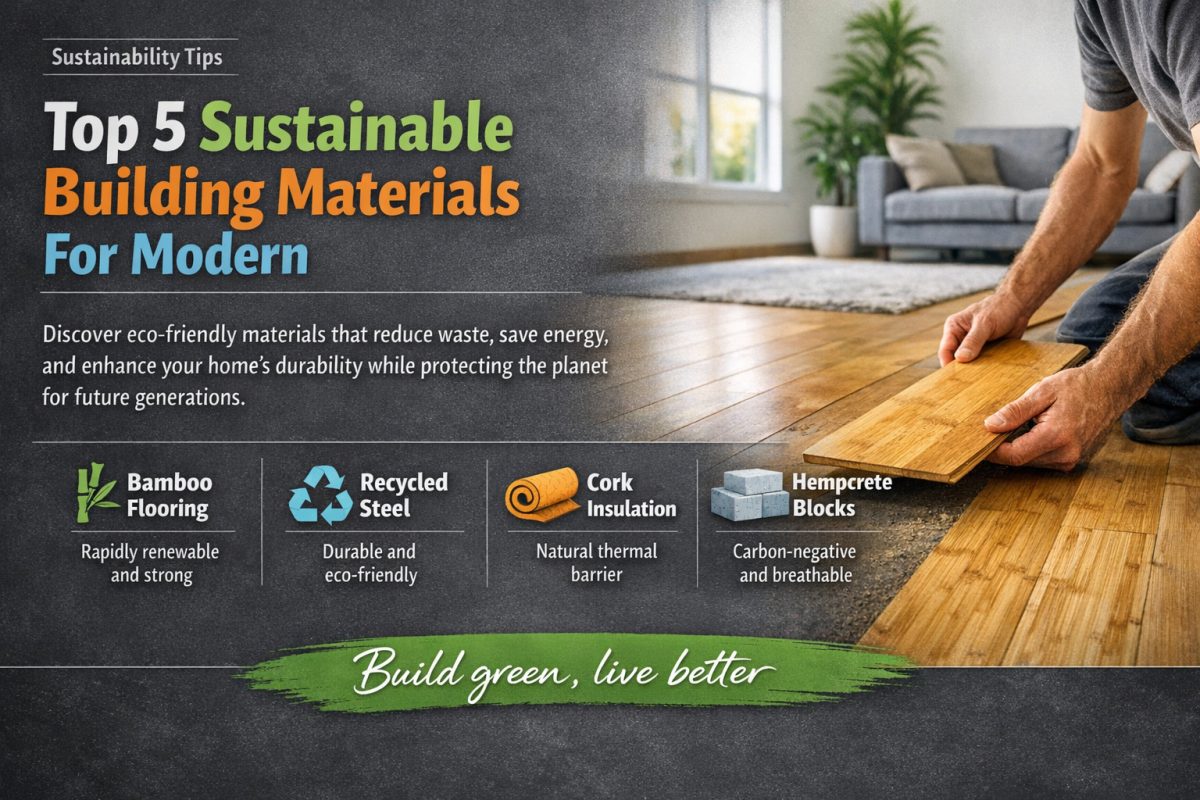
1. Bamboo – Fast-Growing and Renewable
Bamboo is one of the fastest-growing plants on Earth, making it a highly renewable resource. Its strength rivals traditional hardwoods, yet it regenerates quickly without the need for replanting.
Bamboo is used for flooring, cabinetry, and even structural elements in modern homes. Its natural aesthetic also adds warmth and texture to interior spaces.
2. Reclaimed Wood – Beauty with History
Using reclaimed wood repurposes old timber from barns, factories, and other structures. This reduces demand for newly harvested lumber and preserves forests.
Reclaimed wood is prized for its unique character and patina, making it ideal for flooring, paneling, and furniture. It also tends to be denser and more durable than some new wood products.
3. Recycled Steel – Strength Meets Sustainability
Steel is one of the most recycled materials globally. Using recycled steel in construction reduces mining impacts and energy consumption associated with producing new steel.
It is perfect for framing, roofing, and reinforcements due to its durability and resistance to pests and fire. Modern recycled steel products can also be prefabricated, reducing construction waste on-site.
4. Cork – Renewable and Insulating
Cork is harvested from the bark of cork oak trees without harming them, allowing the bark to regenerate every 9-12 years. This makes cork a highly renewable resource.
Cork’s natural insulating properties make it excellent for flooring and wall coverings. It helps regulate indoor temperature and humidity, reducing energy use for heating and cooling.
5. Insulated Concrete Forms (ICFs) – Energy Efficiency Built-In
ICFs combine concrete with insulation foam, creating walls that are strong, energy-efficient, and soundproof. The foam is often made from recycled materials, enhancing sustainability.
Homes built with ICFs typically require less energy for heating and cooling, contributing to long-term cost savings and reduced environmental impact.
Benefits of Using Sustainable Materials in Your Home
Incorporating sustainable building materials offers numerous advantages beyond environmental impact. Here are some key benefits:
- Durability: Many sustainable materials are highly durable and resistant to pests, moisture, and wear.
- Energy Efficiency: Materials like cork and insulated concrete forms improve insulation, reducing energy bills.
- Healthier Living Environment: Natural and non-toxic materials reduce indoor air pollution.
- Unique Aesthetic Appeal: Reclaimed wood and bamboo provide natural beauty and character.
- Reduced Waste: Using recycled and reclaimed materials helps divert waste from landfills.
How to Integrate Sustainable Materials Into Your Construction Project
Planning for sustainability requires a thoughtful approach to material selection and design. Here are some tips to help:
Consult with Professionals
Work with experienced builders and architects who specialize in green construction to ensure materials are selected and installed correctly.
Prioritize Locally Sourced Materials
Choosing materials sourced near your building site reduces transportation emissions and supports local economies.
Combine Materials for Best Performance
Use a mix of sustainable materials to balance cost, aesthetics, and performance. For example, pairing reclaimed wood flooring with ICF walls creates a durable and energy-efficient home.
Plan for Longevity and Maintenance
Sustainable materials often require specific maintenance to preserve their benefits. Understanding care requirements will help your home remain eco-friendly for decades.
Conclusion: Build Smarter with Sustainable Building Materials
Choosing sustainable building materials is a powerful way to create modern homes that are both environmentally responsible and built to last. From fast-growing bamboo to energy-saving insulated concrete forms, these materials provide durability, aesthetic appeal, and energy efficiency.
If you’re ready to take the next step toward a greener home, contact DC & Son Construction today. Our expert team can help you select and implement sustainable materials that meet your needs and budget. Call us at (734) 915-1691 or email info@dcandson.com to start your eco-friendly building journey.